
- Clinical
- Imaging & Planning
- Ancillary Services
- Positioning and Immobilisation
- Treatment Delivery
- Veterinary
- MRI Solutions
- SABR Solutions
- Physics
- QA
- Imaging QA
- Patient QA
- Machine QA
- Encephalon 3D phantom
- myQA® Daily
- myQA® Machines
- MatriXX Resolution
- Prime phantom
- QUASAR™ Heavy Duty Respiratory Motion Platform
- QUASAR™ MLC
- QUASAR™ MRgRT Insight Phantom
- QUASAR™ Motion MR Platform
- QUASAR™ Penta-Guide Phantom
- QUASAR™ Respiratory Motion Phantom pRESP 2.0
- SBRT phantom
- Spine phantom
- StarTrack Detector
- Dosimetry
- Proton QA & Dosimetry
- Software
- MRI Physics Solutions
- QA
- SGRT
- Medical Imaging
- Exterior and Interior Design
- Manufactured by
- Support & Finance
- News
- About
- Contact
QUASAR™ Respiratory Motion Phantom pRESP 2.0
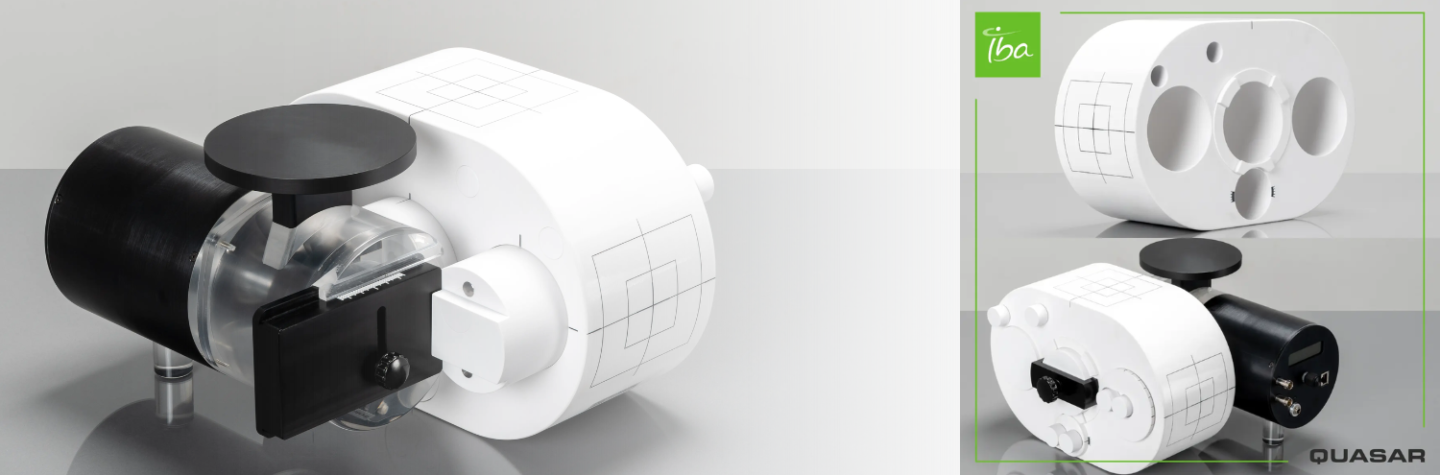
An intuitive tool offering comprehensive testing capabilities.

When Motion isn’t Managed, Confidence is Lost
The challenge
One of the greatest challenges in radiotherapy is managing respiratory motion. Tumors in the thoracic and upper abdomen can shift several millimeters during the breathing cycle. If left uncompensated, this motion compromises targeting accuracy, increases dose to surrounding healthy tissue and ultimately threatens treatment outcomes. Even with advanced technologies such as IGRT and SGRT, without rigorous QA, motion variability introduces uncertainty into every treatment delivered. Without efficient, reliable motion QA, clinicians spend more time managing risk instead of treating patients.
The solution
QUASAR Respiratory Motion Phantom 2.0 ( pRESP ) addresses these challenges directly. As a programmable breathing and tumor motion simulator it allows physicists to perform end-to-end QA on motion-guided RT systems under clinically realistic conditions.
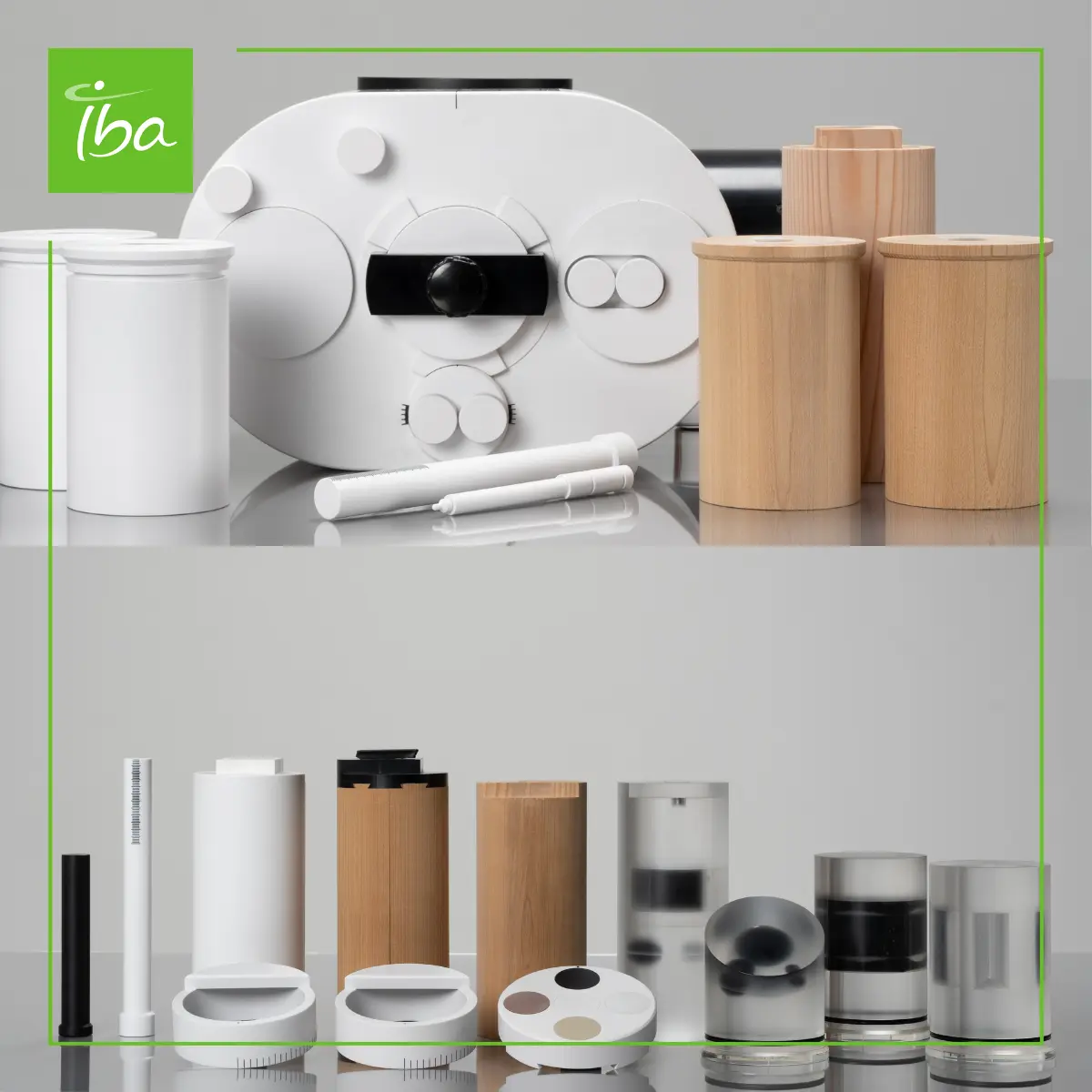
The phantom features a body oval and accessories made from water and tissue equivalent materials, replacing acrylic, to more accurately replicate patient conditions. This upgrade delivers higher-fidelity QA results and reduces the gap between phantom testing and true clinical performance, empowering physicists to verify that their systems are not just functioning but performing at the standard required for modern motion-guided radiotherapy.
Integrate your motion QA with the leaders in SGRT
QUASAR pRESP 2.0 is engineered for precision and clinical versatility. It aligns seamlessly with leading SGRT systems and supports motion tracking and gating via a dedicated chest wall surrogate. It offers:
- Optimized chest wall–to–linear motion ratio.
- 6+ ion chamber locations.
- Interchangeable solid water and lung-equivalent inserts.
This combination delivers a comprehensive QA platform for advanced motion management and treatment simulation.
The phantom is fully compatible with SGRT systems including Vision RT, C-RAD, Brainlab®, and Varian® Identify. Patient-specific waveforms can be imported from a wide range of motion capture and waveform generation tools, supporting formats such as VXP, CSV, TXT, DCM, LOG, DAF, and IMA.
Software and Workflow Efficiency
Included with the phantom is the QUASAR Respiratory Motion QA Software that provides intuitive, programmable motion control. Users can create, customise, and import motion profiles, including patient-specific waveforms. It also incorporates a Deep Inspiration Breath Hold (DIBH) testing mode, improving workflow efficiency for clinical teams validating advanced treatment techniques.
Optional inserts
IBA Quasar offers an extensive set of inserts and holders. Please find our current section below.
- Additional RW3 Ion Chamber Holder- MP, RESP (major suppliers available on request)
- Dummy Polystyrene Ion Chamber- (NE2571 0.60cc Farmer Type)
- Cedar Insert with Solid Tumor centered
- Cedar Insert with Solid Tumor (15 mm) centered
- Cedar Insert with Solid Tumor (30mm) plus Gold Fiducials -centered
- Cedar Insert with Solid Tumor centered- drilled for Ion Chamber
- Cedar Insert with Solid Tumor (15 mm) centered-drilled for IC
- Cedar Insert with Solid Tumor (30mm) with Gold Fiducials centered - Drilled for IC
- Cedar Insert with Split Tumor centered- for Gafchromic film
- Cedar Insert - Split - Centered 32 mm Cube Opening
- Hollow Insert with screw cap (7.25cm inside diameter)
- 4D CT Imaging Insert
- PET CT Insert
- RW3 MP Insert Adapter
- Offset-Cedar Insert with Solid Tumor
- Offset Cedar Insert with Solid Tumor (15mm)
- Offset Cedar Insert with Solid Tumor (30 mm) plus Gold Fiducials – for imaging
- Offset-Cedar Insert with Solid Tumor- drilled
- Offset Cedar Insert with Solid Tumor (15 mm) -drilled for IC
- Offset Cedar Insert with Solid Tumour (30 mm) plus Gold Fiducials –drilled for IC
- Offset-Cedar Insert with Split Tumor- for Gafchromic film
- Offset-Cedar Insert with Split Tumor - Multiple OSLD Holder
- Offset-Cedar Insert - drilled for Ion Chamber
- Offset-Cedar Insert - Split - Offset 32 mm Cube Opening
- Solid sphere with Gold Fiducials
- Split Sphere with Gold Fiducials
- RESP - Split Cedar Dual Target Insert - 30mm tumor in the offset position with adjacent 15mm tumour shifted 45degree towards the center
- RESP - Cedar Insert - drilled for Ion Chamber (Centered)
- MP-Spatial Resolution Insert (CT Imaging)
- MP- Bone Rod with 5mm Titanium Rod Insert
- MP-Cedar Ion Chamber Holder Insert (drilled)
- Arcylic ion Chamber Holder
- 125/27cc dual cube insert (acrylic)
- 60 degree air wedge insert (acrylic)
- 20 degree air wedge, 5mm rod and 10mm rod insert (acrylic)
- RW3 insert with offset tumour (30mm) drillable for ion chamber
- Split RW3 Insert with 30mm and 15mm tumor targets
Varian® and Brainlab® are trademarks or registered trademarks of Varian Medical Systems, Inc. Use of them does not imply any relationship, sponsorship, or endorsement between IBA or its products and Varian Medical Systems, Inc.
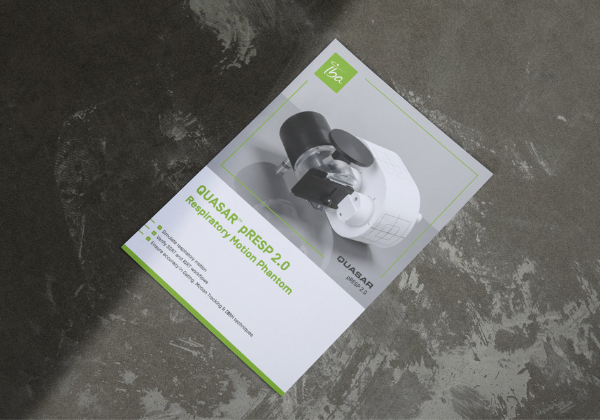
QUASAR pRESP 2.0

Request a demo
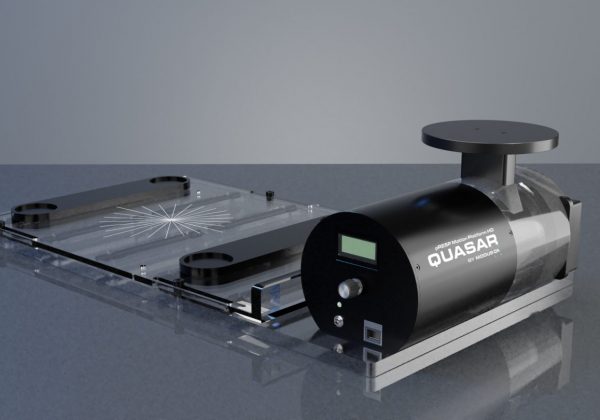
Heavy Duty Respiratory Motion Platform
Found what you're looking for or need to discuss your requirements?
Call us today on +44 (0)1743 462694 or email us here
Access your product documents and software downloads via OSL Portal