BolusCare

The next generation of bolus in radiotherapy.
Precise. Flexible. Ready to use immediately.

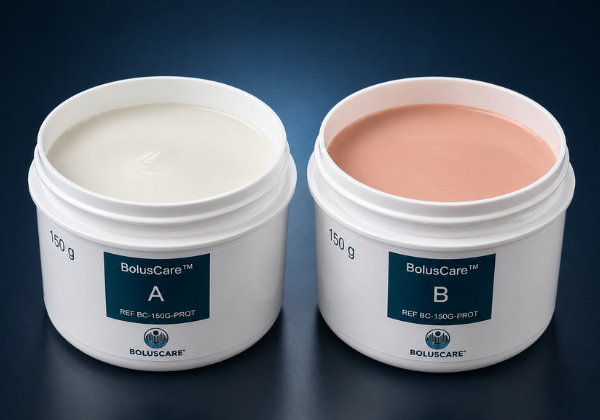
BolusCare® is an innovative, polymer-based bolus material for modern radiotherapy. Designed for maximum adaptability and ease of use, BolusCare enables more precise treatment – ​​without the limitations of traditional solutions.


Why BolusCare?

The demands in radiation therapy are increasing: greater precision, better reproducibility, and more efficient workflows are required.
BolusCare addresses precisely these challenges.

The most important advantages at a glance:

  • Two-component system
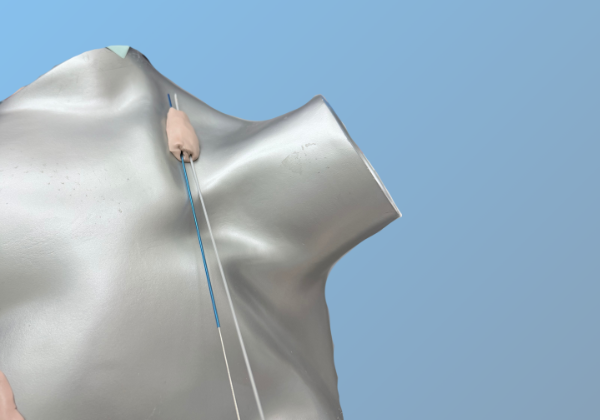
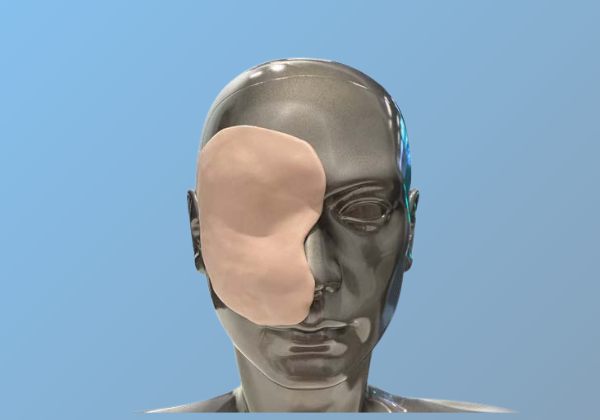
    • Individually moldable directly on the patient
    • Perfect adaptation to every anatomy
    • No pre-forming or post-processing necessary
  • No air gaps
    • Perfect fit on the skin
    • Maximum reproducibility
    • Higher treatment accuracy
  • Simple & quick application
    • Can be applied directly to the skin
    • No additional equipment required
    • Significantly simplified workflow for medical radiology technologists and doctors
    • SGRT visibility
  • Various sizes available
    • 30g, 80g, 150g
    • Suitable for every indication
    • Efficient in daily use
  • No fixed thickness is required anymore
    • Integration into CT planning (~500 units)
    • Flexible adaptation as needed
    • More freedom in treatment planning

A comparison with existing solutions reveals the differences:

Thermoplastic bolus materials are:

    • Complex to use
    • They have a rigid shape
    • Risk of air gaps
    • Fixed thickness required

BolusCare: flexible, individual, reproducible

  • 3D-printed bolus solutions mean:
    • High acquisition costs
    • Software & know-how required
    • Time-consuming production
    • Material costs

BolusCare: immediately available – no printer, no software required

  • Developed for modern radiation therapy
    • Optimised for CT-guided planning
    • Suitable for near-surface irradiation
    • Ideal for reproducible patient positioning
    • Future-proof for MR-guided therapy approaches